
Tech Chat | How to build a CORS station? – Chapter 2
In the previous chapters, we talked about how to site an ideal location for a CORS station and analyze GNSS data quality. After these preparations, we can start building the CORS station.
The construction of the CORS station includes two parts, outdoor and indoor, as shown in the figure below. The outdoor part includes a GNSS antenna, a lightning rod and solar panels (optional). The indoor part includes a GNSS receiver like the SV100, antenna surge protectors, power and internet.
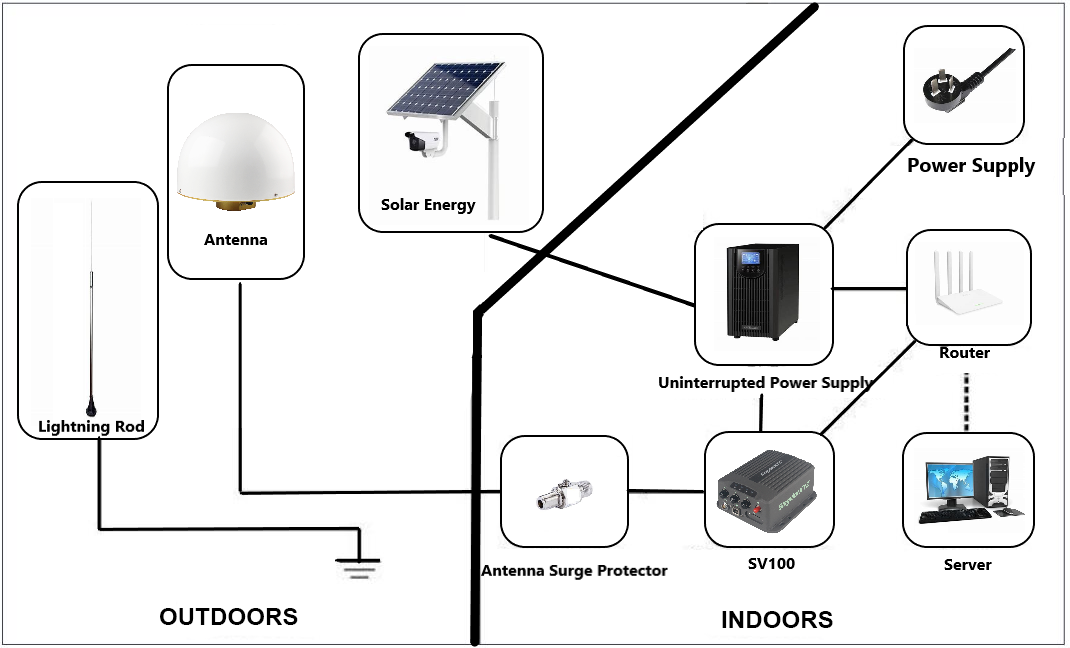
For the outdoor construction part, how to set up the GNSS antenna should be the top priority. In today's blog, we will take the SA500 choke ring antenna as an example to show you how to choose a suitable GNSS antenna installation method.
Based on different installation environments, there are usually three ways to install the antenna.
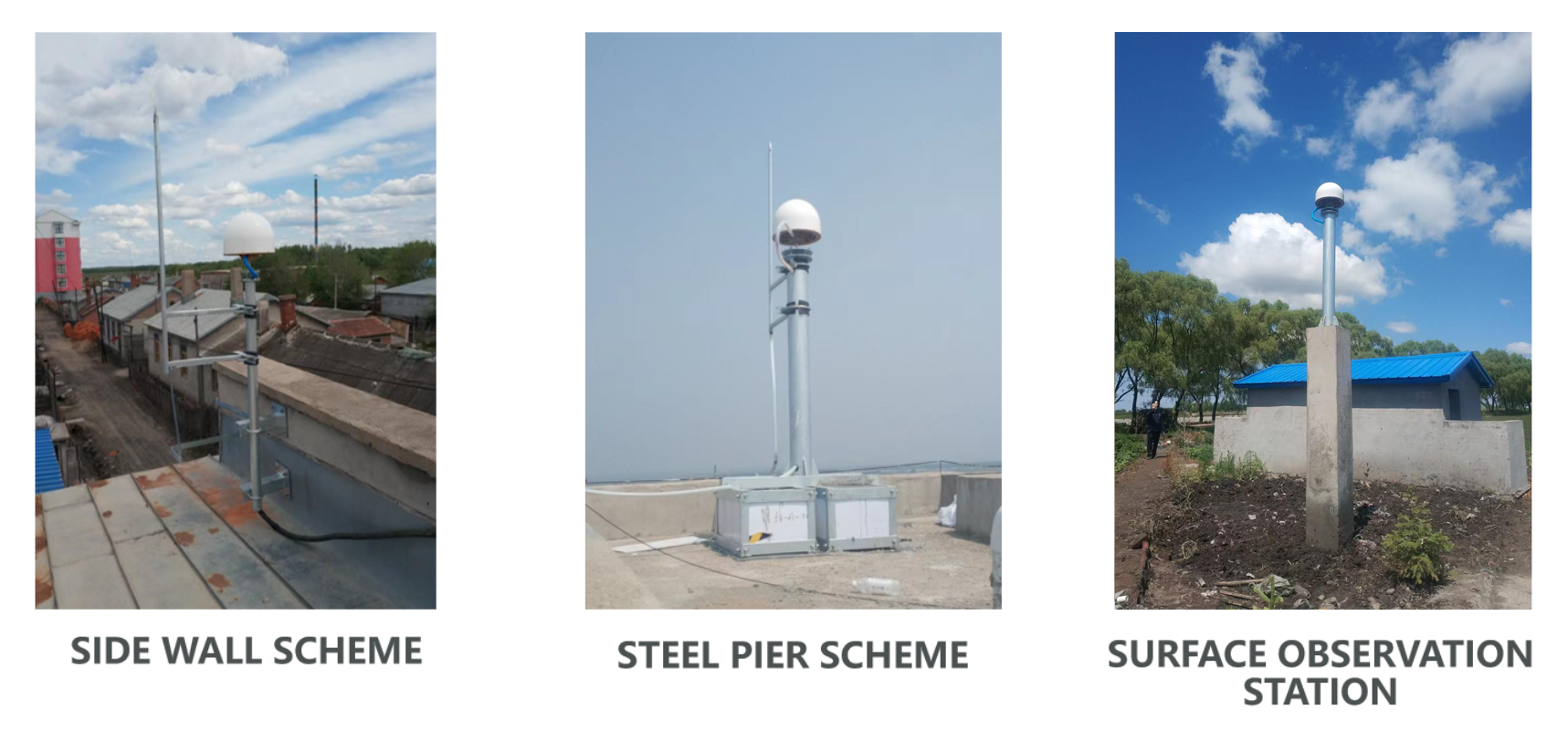
Method 1: Side Wall
Installation environment requirements
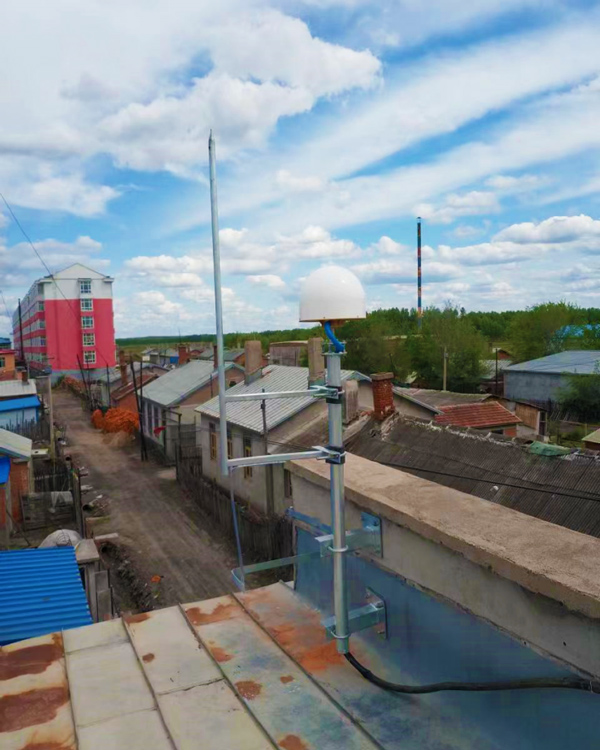
This method is built on the roof parapet.
The storey height does not exceed 30 meters, the building age does not exceed 20 years, and the building is a multi-storey concrete structure.
The installation environment requires a solid wall with a thickness greater than 20CM and a height greater than 70CM.
The site should comprehensively consider the lightning protection environment, and the wall should be grounded. If the lightning protection coverage is not enough, it is necessary to add lightning rods.
Installation procedure
Step 1: First, you need to drill holes in the wall and clean the holes. The first choice for fixing bolts is chemical bolts.
Step 2: There must be fixing screws in the four screw holes of each support rod seat, and there must be no omissions. The distance between the bases of the two support rods should be 30cm-60cm, which can be adjusted according to the height of the wall. In order to ensure stability and safety, the height of the steel pipe protruding from the wall should be 30cm.
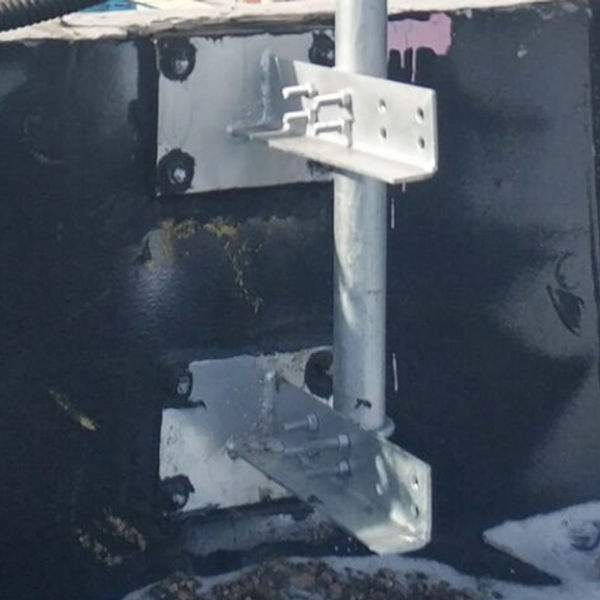
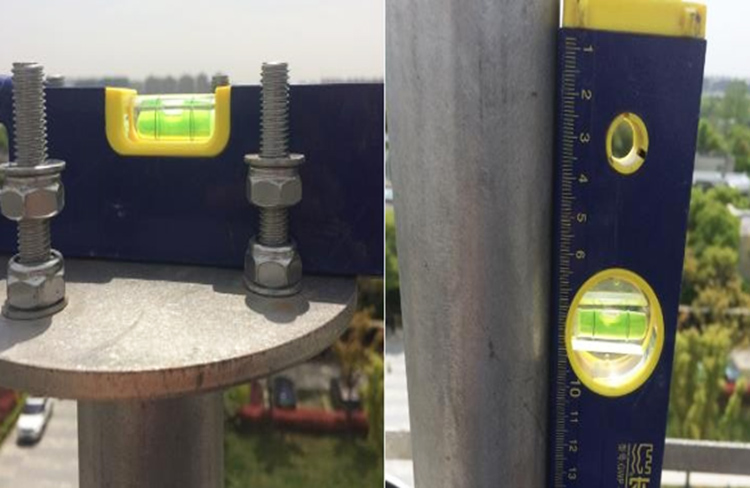
Step 3: A weight plate should be installed on top of the steel pipe. The side wall pipe should be perpendicular to the horizontal plane during installation. The antenna is generally higher than the wall.
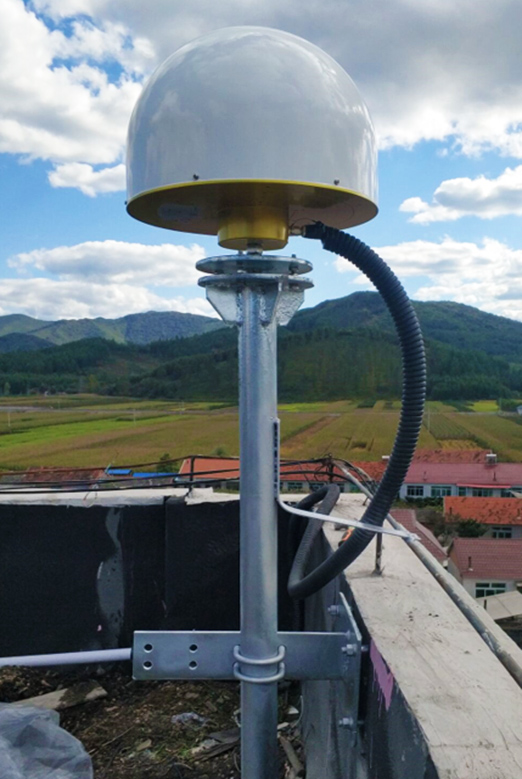
Step 4: Install the GNSS antenna. The antenna cable from the antenna to the internal equipment room must be protected by a protective tube. The size of the protection tube must be appropriate (refer to a water pipe with a diameter of 30mm), and all connections must be sealed.
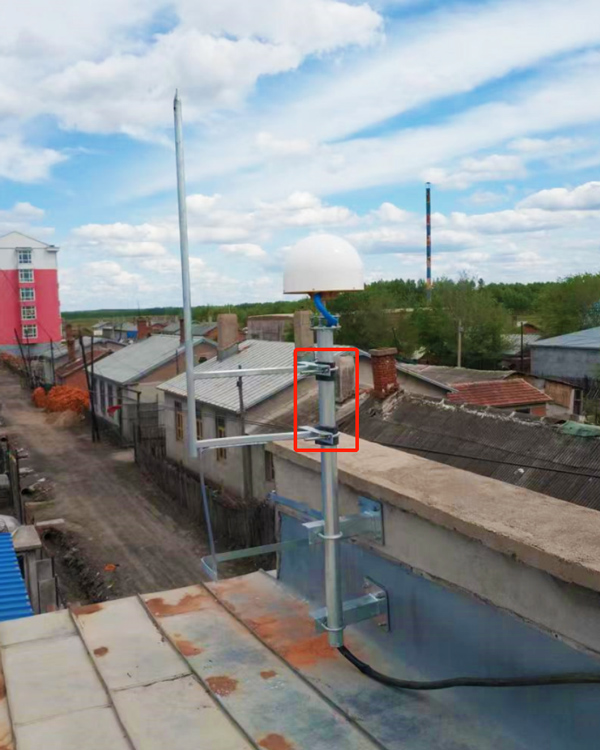
Step 5: Install the lightning rod, make sure that there is an insulator between the lightning rod and the side wall rod, and they cannot be in direct contact. And solder the lightning rod lead to the ground.
Method 2: Steel Pier
Installation environment requirements
When there is no qualified structural roof to install the side wall scheme, the steel pier scheme is adopted.
The site has a wide field of view, and the field of view should not be blocked by obstacles with an elevation angle greater than 10°.
There should be no multipath effects around the site, that is, objects that strongly reflect satellite signals, such as large glass walls and large metal billboards.
The load-bearing capacity of the roof meets the overall weight requirements.
The site should comprehensively consider the lightning protection environment, and the wall should be grounded. If the lightning protection coverage is not enough, it is necessary to add lightning rods.
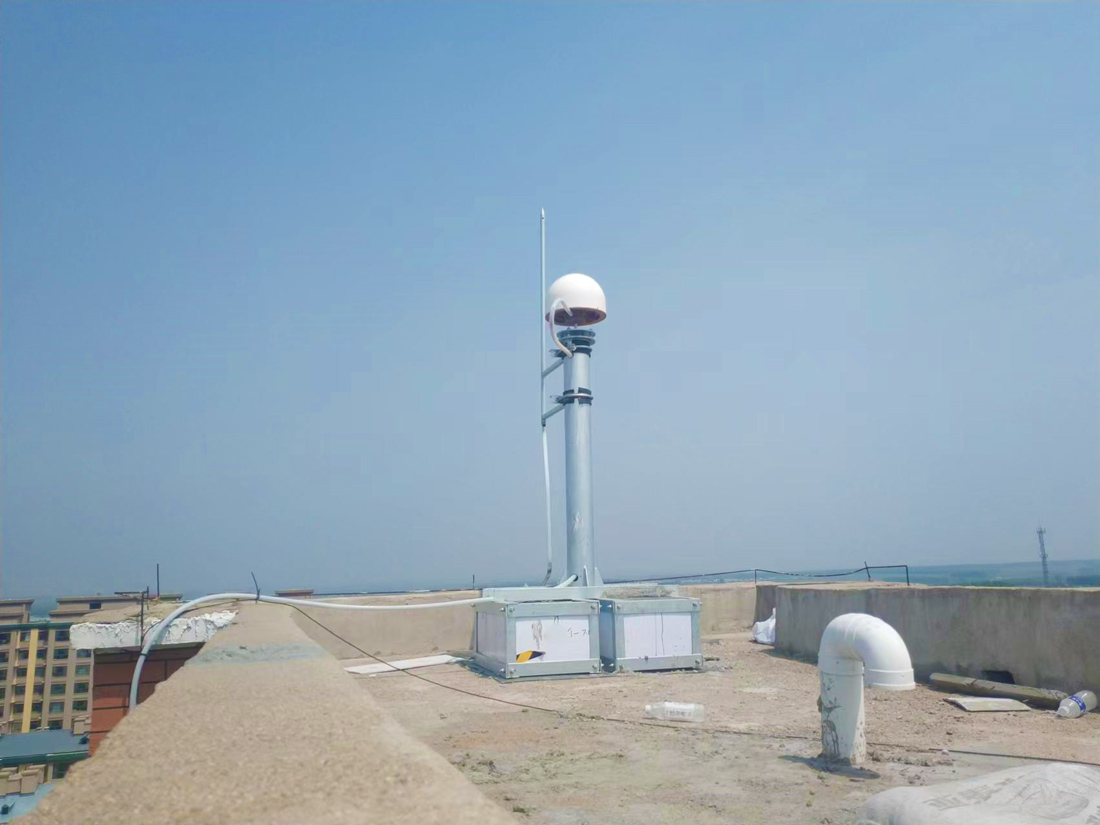
Installation procedure
Step 1: First, set up the base and fill it with cement blocks to ensure that the base is level and stable without shaking.
Step 2: Install and secure the steel column.
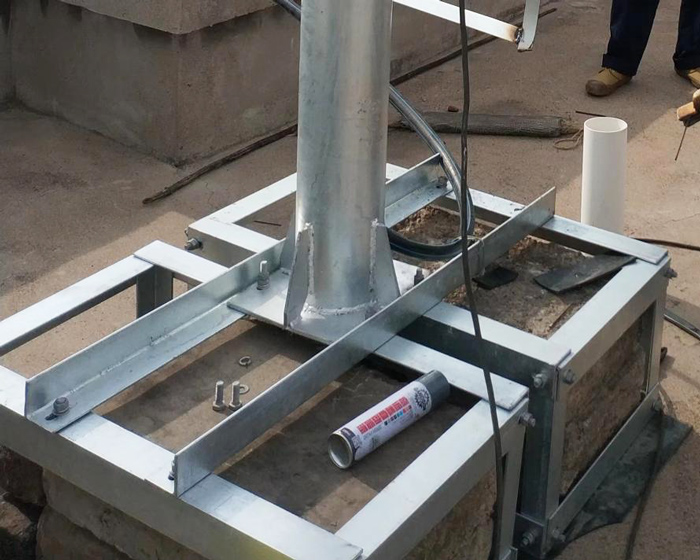
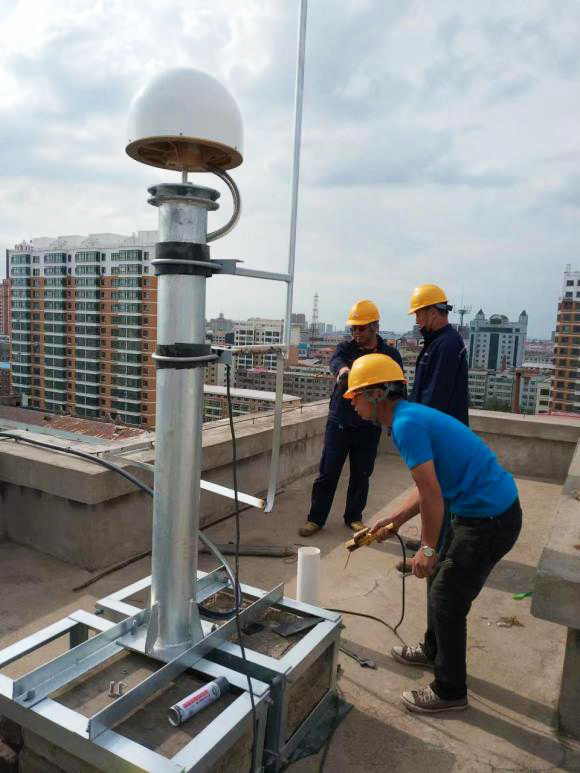
Step 3: Install the choke antenna and antenna cable. Don't forget to install the protection tube.
Step 4: Install the lightning rod, make sure that there is an insulator between the lightning rod and the steel column, and it cannot be in direct contact. And solder the lightning rod lead to the ground.
Method 3: Surface Observation Station
Installation environment requirements
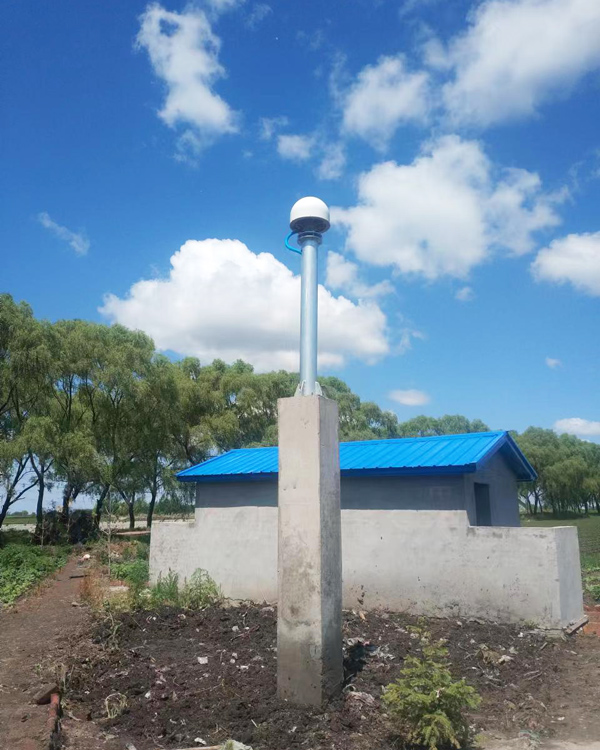
When the conditions of the side wall and steel pier scheme cannot be met, the CORS station can be built on the ground.
Ensure that there is a stable power supply and network communication facilities nearby.
When considering this method, the site location must be within the original lightning protection coverage of the site, otherwise it will not be considered.
Do not use this method unless necessary, because its cost is higher than the first two options.
Installation procedure
Step 1: After selecting a suitable site, excavate the foundation and dig the foundation pit to the frozen soil layer. If there is no frozen soil layer, dig to 800mm (500mm in rock formation), and the size of the foundation pit is slightly larger than the specified size.
Step 2: After the foundation pit is dug, place the bundled steel bars and wiring pipes, and pour concrete.
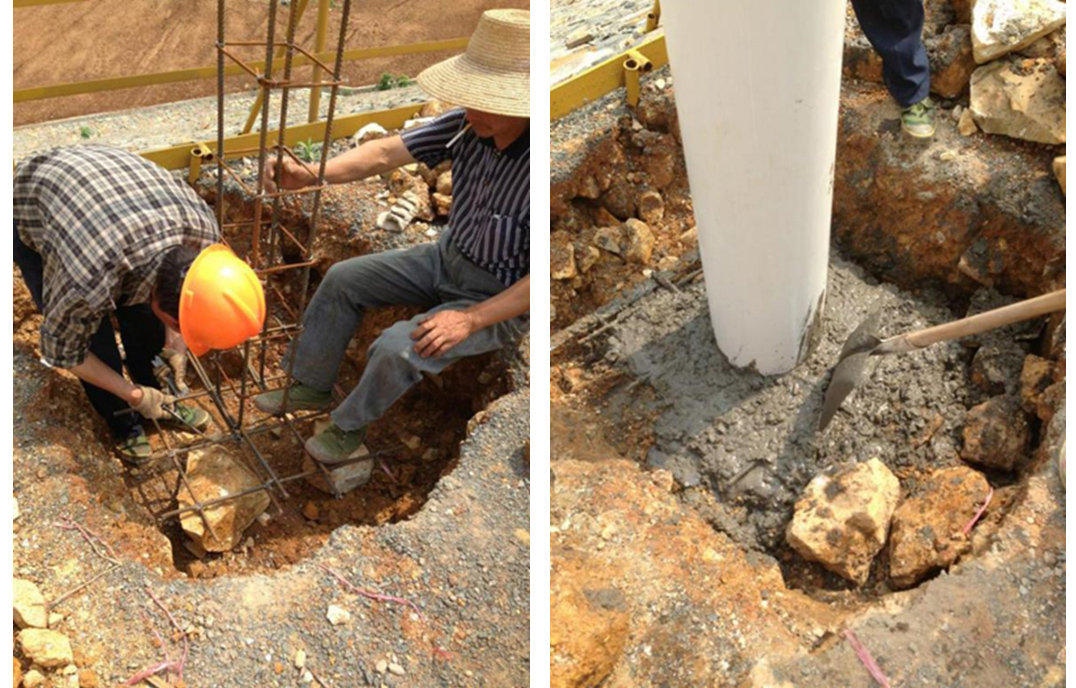
Step 3: After the pouring is completed, use a centering device to strictly level it.
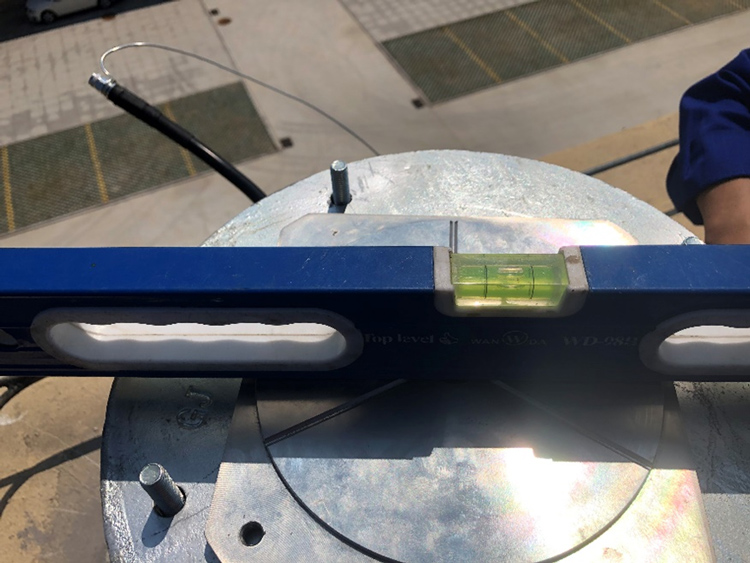
Step 4: Install the choke antenna, antenna cable and lightning rod. Don't forget to install the protection tube.
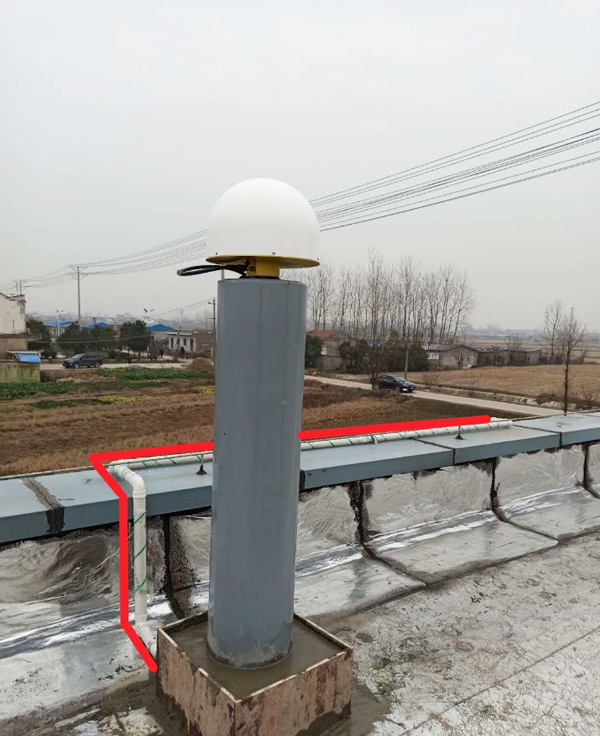
All above is about the installation of the outdoor GNSS antenna. In the next chapter, we will talk about how to install the indoor part.
Learn more about our CORS solution and related products.